Nowadays, using AI coding plan mode, we are spoiled by the ease of creating a robust plan with a simple prompt. The AI generates step-by-step plans with clear dependencies, structured and clean. This might be a gift, because it sharpens our critical thinking and our instinct for what feels off when reviewing and discussing the plan before accepting it (If we did it :D).
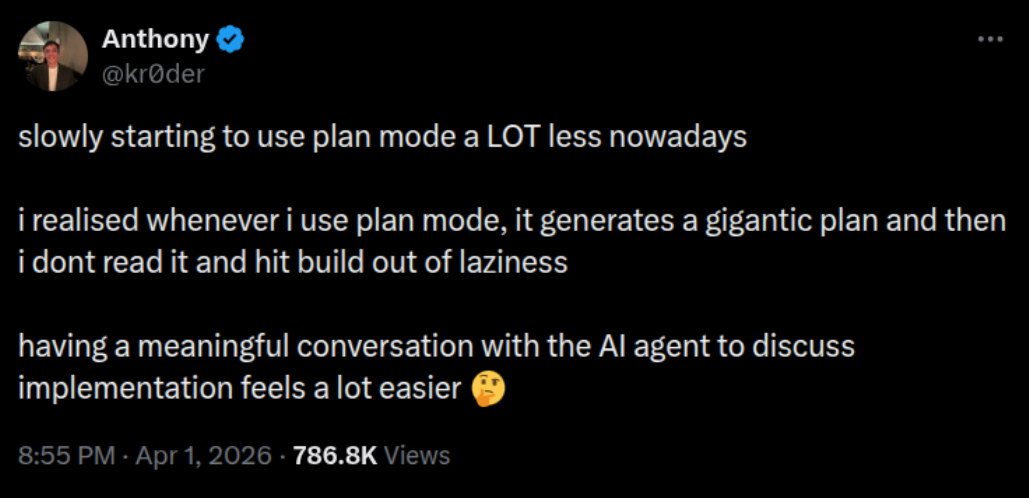
But something is missing here. The joy of planning ourselves. When we scratch a pen on paper, scribbling arrows and diagrams, finding pros and cons, weighing the trade-offs of the flow we created. The planning and thinking happen together. And we’re skipping it without noticing.
The Cost of Delegation
Depending entirely on AI costs us less thinking, not fewer ideas. We actually have more ideas now, and we don’t hesitate to implement them because it’s cheap and easy. The problem runs deeper. There’s a difference between having an idea and thinking through an idea. We’re doing a lot more of the first one lately.
Sometimes I pity AI because it has to deal with my ignorance, even about my own features. When I feel this way, I consider stopping the task, gathering better context, and then continuing. It also helps save tokens.
What we’re losing is depth of thinking. Involvement. Ownership. The spark that used to ignite inside our brain is now faded by the easiness of delegation. Here is the thing: when you delegate the planning entirely, you also delegate the understanding. A ten-step plan feels like progress. But skimming it and hitting build is just outsourcing your thinking with extra steps.
The scarier part is what happens when it breaks. Without having planned it yourself, there’s no instinct to reach for. No sense of where the fault might live.
It’s not wrong to plan with AI. The point is to pre-plan, to be involved, to brainstorm your own idea before jumping into the discussion. Come with something. Even something rough. Because when you arrive with your own thinking, the AI becomes a collaborator instead of dictator.
Your understanding of your own system is also what makes AI output better. When you know your codebase and your domain, you will become the quality gate, not just the person who clicks accept.
The Paper Plan
It doesn’t have to be fancy. A paper plan is enough.
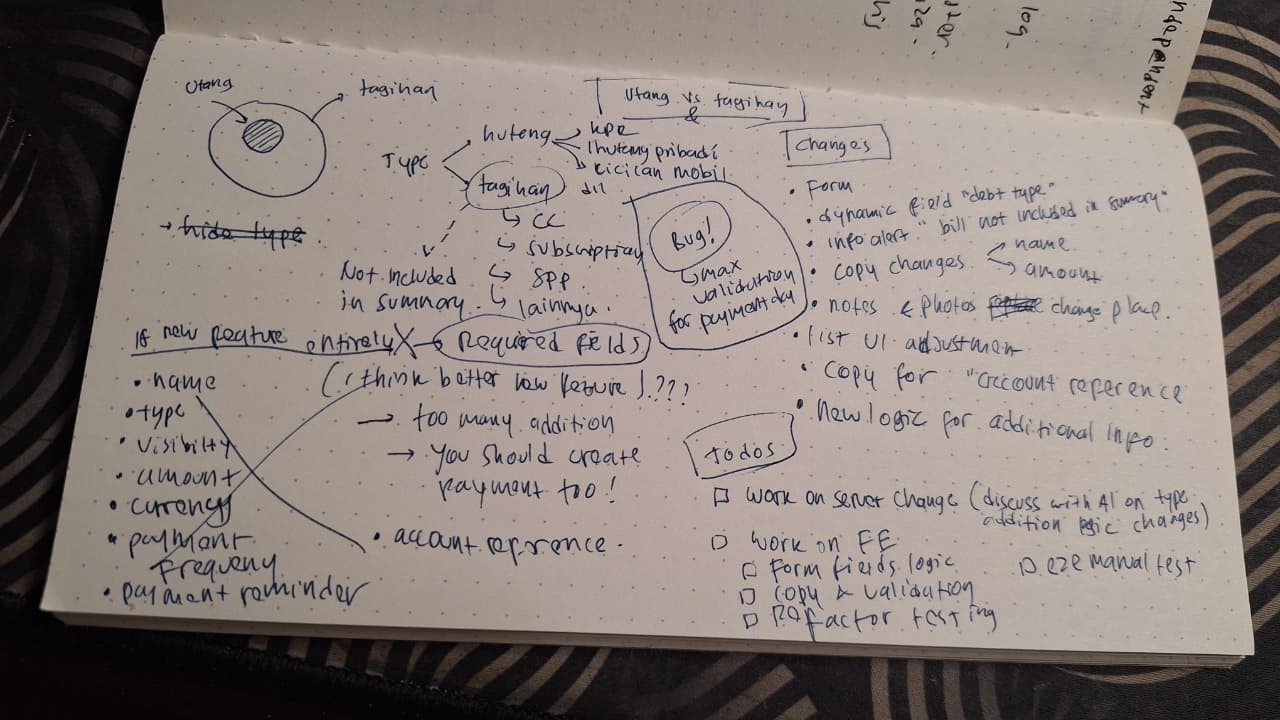
Scratch what feature you’ll work on. Sketch the flow you think is the best approach based on your research, or even your assumptions that born from your experience. Write down what you think the dependencies are. Draw the arrows. Cross things out. That messiness is the thinking.
Then, and only then, feed it to the AI. Build a better prompt from your own idea. Brainstorm, challenge it, let it poke holes in your thinking.
You might find that the AI completely ditches your plan, marking your approach as suboptimal. Good. You just learned something. We learn more from our mistakes than from plans we never owned in the first place.
Last, thinking about your project more, rather than giving it directly to the AI will nurtures code ownership. The feeling of involvement in the code, or even coding parts of the application yourself, boosts that ownership even more.
PS
A good writing about slowing down in AI era.