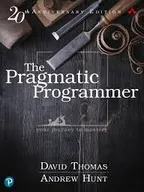
I finished The Pragmatic Programmer yesterday, and it’s still echoing in my head—not because of any specific technique, but because of how it shifted the way I think about my work.
The book is full of practical advice, sure. But what really stood out were the habits. The attitudes. The practices that separate developers who just write code from those who genuinely craft software.
This is my attempt to capture those lessons. The mindsets that hit me hardest and the habits I want to carry forward as an engineer.
Care About Your Craft
This one sounds obvious, but it’s easy to forget when deadlines pile up. Caring about your craft means treating code as something worth doing well. Not just something to ship and forget.
You treat software as a craft worthy of pride, not just a task to finish. That shows up as attention to clarity, maintainability, and ethics even when nobody is watching, and a continual desire to “leave things better than you found them.”
Provide Options, Not Excuses
It’s tempting to point fingers when things don’t go as planned. The legacy code is a mess. The requirements keep changing. The timeline was unrealistic from the start.
But pragmatic programmers resist that urge. Instead of showing up with reasons why something failed, they show up with possibilities. “We can’t hit the original deadline, but here are three paths forward—each with different trade-offs.”
No “Broken Windows”
One broken window left unrepaired signals that nobody cares, and soon more windows get smashed. Codebases work the same way.
A flaky test everyone ignores. A function named handleStuff. A TODO comment from two years ago. Small messes seem harmless on their own, but they add up. Worse, they send a message—that negligence is allowed.
Pragmatic programmers don’t step over the mess. They either fix it on the spot, isolate it so it doesn’t spread, or at minimum mark it with a clear plan. The point isn’t perfection. It’s refusing to let rot become normal.
See the Big Picture
It’s easy to get tunnel vision. You’re deep in a ticket, focused on making the code work, and everything outside that scope fades away.
But pragmatic programmers make a habit of zooming out. How does this change affect the user? What happens downstream in the data flow? Will this make life harder for ops or the next team touching this code?
At the end of the day, we write code to delight users—not just to close tickets. Local wins can be global losses. A shortcut that saves you an hour might cost someone else a day. A quick fix that works for your service might break assumptions elsewhere. Keeping the bigger picture in mind doesn’t mean overthinking every line—it just means staying aware that your code lives in a system, not a vacuum.
Be a Catalyst for Change
Nobody likes being lectured. Telling teammates they should write better tests or clean up their scripts rarely works—it just creates friction.
Pragmatic programmers take a different approach. They lead by doing. Write that helper script and share it. Improve the deployment checklist and let people notice how much smoother things got. Refactor a confusing module and show what’s possible.
Small wins are contagious. When you make the better way also the easier way, people naturally gravitate toward it. You don’t need permission or a grand initiative. Just start, make it visible, and invite others along.
Jack of All Trades
Specialization has its place, but pragmatic programmers don’t let themselves get boxed in. They intentionally build breadth—poking into frontend when they’re mostly backend, learning enough infra to understand deployments, picking up product context to know why they’re building something.
You don’t need to master everything. The goal is fluency, not expertise. Enough to have meaningful conversations across teams. Enough to see how your work connects to the bigger system. Enough to catch issues that live in the gaps between specialties.
Think Deliberately
It’s easy to slip into autopilot. Copy a pattern from somewhere else, tweak until it works, move on. But pragmatic programmers resist that mode. They pause and ask: why does this work? What assumptions am I making here? Would this still hold if the input changes?
The book calls this avoiding “programming by coincidence”—writing code that happens to work without truly understanding why. That kind of code is fragile. It breaks in unexpected ways because it was never built on solid reasoning to begin with.
Thinking deliberately means being intentional. Question the defaults. Document your reasoning so future-you (or your teammates) can follow the logic. Reflect regularly—not just when things break, but when they succeed. Understanding why something works is just as important as getting it to work.
Continuously Learn
Skills decay. Tools evolve. What made you effective two years ago might not be enough tomorrow.
Pragmatic programmers treat learning like an investment portfolio. Regular deposits—reading a chapter, taking a short course, experimenting with a new tool, teaching a concept to someone else. Small, consistent efforts that compound over time.
And like any good portfolio, it needs diversification. Don’t just go deeper in what you already know. Explore adjacent domains. Pick up something outside your comfort zone. The goal isn’t to chase every trend, but to stay adaptable—so when the landscape shifts, you’re not scrambling to catch up.